
High Cholesterol Explained: When Lifestyle Isn't Enough
High cholesterol often causes no symptoms. Learn what your numbers mean, how long to try lifestyle changes, and when medication may help.
Alaa Hammond, MSN, APRN, FNP-C, MSN, APRN, FNP-C
August 25, 2026

High cholesterol doesn't always mean a prescription on day one. For most patients, the first move is diet and exercise. But cholesterol numbers don't always cooperate. More than 1 in 3 U.S. adults has prediabetes, according to the CDC, and that condition frequently travels alongside unhealthy cholesterol patterns. Genetics, age, and other conditions can keep your LDL stubbornly high no matter how clean you eat. So when does lifestyle stop being enough? Here's what actually happens between your first high reading and a decision about medication, based on how chronic condition management works at Lyva Primary Care & Wellness Center in Avondale Estates.
Not sure what your numbers mean?
A simple lipid panel can tell you exactly where you stand and what to do next.
Book Appointment →What Does It Mean to Have High Cholesterol?
High cholesterol means there's too much fatty substance called LDL cholesterol building up in your blood. That buildup narrows your arteries over time. It rarely causes symptoms. Most people find out from a routine blood test, not from how they feel.
Your body actually needs cholesterol. It builds cell walls and helps make hormones. The problem starts when LDL, the "bad" kind, climbs too high while HDL, the "good" kind, drops too low. That imbalance raises your risk for heart attack and stroke over time, sometimes years before any symptom shows up. Heart disease linked to this kind of buildup is the leading cause of death in the U.S., responsible for about 1 in 5 deaths, according to the CDC.
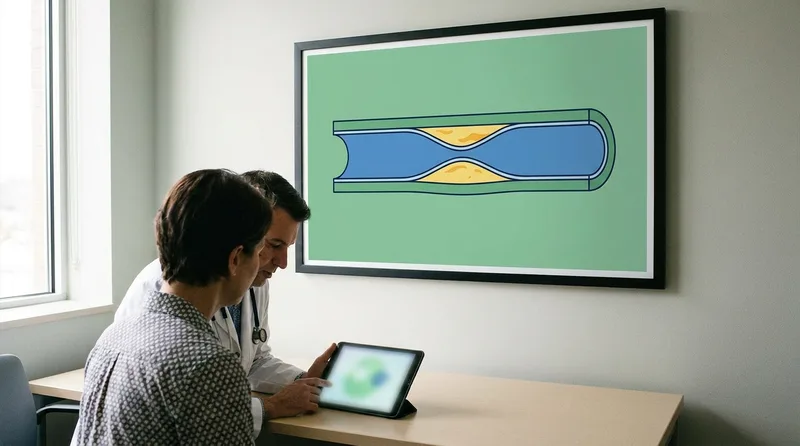
According to the CDC, high cholesterol behaves a lot like high blood pressure and diabetes: it's typically found through routine screening, not through how a patient feels day to day. That's exactly why an annual lipid panel matters, even when you feel completely fine.
- Total cholesterol: the combined measurement of LDL, HDL, and other lipids
- LDL: carries cholesterol into artery walls, where it can build up
- HDL: carries excess cholesterol away from arteries, back to the liver
- Triglycerides: a separate type of blood fat, often elevated alongside high LDL
What Causes High Cholesterol Besides Diet?
Diet matters, but it's rarely the only factor. Genetics play a large role, and some patients inherit a condition called familial hypercholesterolemia that keeps LDL high regardless of what they eat. Age, sex, and certain health conditions push numbers up too.
A 45-year-old with a family history of early heart attacks faces a different risk profile than a 45-year-old without one, even on an identical diet. That's why your provider looks at the whole picture, not just your plate. Weight also plays a role that goes beyond willpower. About 2 in 5 U.S. adults live with obesity, according to the CDC, and excess weight changes how your liver processes fat, which can raise LDL and triglycerides at the same time.
- Family history of high cholesterol or early heart disease
- Diabetes or prediabetes, which often travels with high triglycerides
- An underactive thyroid, which can raise LDL
- Certain medications, including some steroids and diuretics
- Getting older. LDL tends to rise with age for most adults
- Carrying excess weight, especially around the waist
Related: High cholesterol and high blood pressure often show up together and share many of the same risk factors. Read our guide to managing high blood pressure in Georgia →
How Long Should You Try Lifestyle Changes First?
Most providers give lifestyle changes 3 to 6 months before adding medication, unless your risk is already high. That window gives your body time to respond to a new way of eating and moving. Not everyone gets the same timeline, though.
If your LDL is only mildly elevated and you have no other risk factors, your provider may recommend a longer trial, sometimes stretching toward 6 to 12 months with regular recheck labs along the way. Nearly half of U.S. adults, about 48%, also have high blood pressure, according to the CDC, and the two conditions are frequently managed on the same timeline. If you already have diabetes, a prior heart event, or very high LDL, medication might start sooner, alongside lifestyle changes rather than after them. There's no shame in needing both. Most patients on cholesterol medication still benefit from every lifestyle change on this list.
Your recheck schedule matters too. A lab drawn too soon can look discouraging even when your habits are working, since LDL typically needs 6 to 8 weeks to reflect a new routine. Your provider will usually set a specific recheck date rather than leaving it open-ended.
What Lifestyle Changes Actually Lower Cholesterol?
The changes that move LDL the most are consistent, not extreme. Small, sustained habits beat short bursts of motivation every time. Here's what tends to make a measurable difference over a few months, based on what actually shows up in follow-up labs.
- Swap saturated fats (butter, fatty red meat, fried foods) for unsaturated fats like olive oil, nuts, and fatty fish
- Add soluble fiber daily. Oats, beans, and apples can lower LDL directly
- Get moving. 150 minutes of moderate activity a week raises HDL and helps manage weight
- Losing even 5 to 10% of your body weight can improve cholesterol, blood pressure, and blood sugar together, according to NIH research
- Cut back on alcohol, which can raise triglycerides
- Quit smoking. It lowers HDL and damages artery walls directly

None of these require perfection.
Building a plan around your numbers
Every patient's cholesterol picture is different. Lyva builds a personalized plan around your labs, your history, and your goals.
Request an Appointment →When Does Cholesterol Become High Enough to Need Medication?
Medication usually enters the conversation when LDL stays above target after a genuine lifestyle trial, or when your overall cardiovascular risk is high enough that waiting isn't worth it. The decision isn't based on one number alone.
Your provider weighs your LDL level against your age, blood pressure, smoking status, diabetes, and family history using a risk calculator. Only about 1 in 4 adults with high blood pressure have it fully under control, according to the CDC, which is part of why providers look at your whole cardiovascular picture rather than cholesterol in isolation. Two people with the same LDL can get different recommendations because their overall risk is different. A 60-year-old smoker with a family history of heart disease and an LDL of 140 may need medication now, while a healthy 30-year-old with the same LDL might just need more time on lifestyle changes.
| Measurement | Desirable Range | Higher Risk |
|---|---|---|
| Total Cholesterol | Below 200 mg/dL | 240 mg/dL and above |
| LDL ("bad") | Below 100 mg/dL | 160 mg/dL and above |
| HDL ("good") | Above 60 mg/dL | Below 40 mg/dL |
| Triglycerides | Below 150 mg/dL | 200 mg/dL and above |
These ranges guide the conversation, according to the CDC's cholesterol guidance. They aren't a diagnosis on their own. Your provider reads them alongside your history and how your numbers are trending.
Related: Cholesterol, blood sugar, and metabolic health tend to move together, especially with prediabetes. See how to reverse prediabetes →
What Should You Expect If You Need Medication?
If medication does become part of your plan, it's typically added to lifestyle changes, not used instead of them. Statins remain the most common option, and other medications exist for patients who need a different approach or can't tolerate statins.
According to the American Heart Association, treatment plans work best when diet, activity, and medication move together rather than any single piece carrying the load. Starting a medication isn't the end of the conversation. Your provider checks in periodically, and it's common to adjust the plan once before landing on what works.
- A follow-up lipid panel, usually a few months after starting
- A quick check on how you're tolerating the medication
- A review of whether your other lifestyle changes are still on track
None of this happens all at once, and it's not a sign the first plan failed. Cholesterol management is usually a series of small adjustments, not one decision made and left alone.
This article is for general educational purposes only and is not a substitute for professional medical advice, diagnosis, or treatment. Always consult your provider at Lyva with any questions about a medical condition or treatment.
High cholesterol is manageable, and the plan that works is the one built around your actual numbers, not a generic checklist. Start with a lipid panel. From there, you and your provider can decide together whether lifestyle changes need more time, or whether it's time to add medication to the plan.
Ready to check your numbers?
Same-day appointments are often available at Lyva Primary Care & Wellness Center in Avondale Estates, plus telehealth across Georgia.
Book Appointment →Prefer to talk it through first?
Call (404) 905-6666 →Alaa Hammond, MSN, APRN, FNP-C
MSN, APRN, FNP-C · Lyva Primary Care & Wellness Center
Avondale Estates, GA family nurse practitioner providing whole-person primary and preventive care — including chronic disease management, men's health, and medical weight loss — in person and via telehealth across Georgia.
Frequently Asked Questions
Was this article helpful?
You may also like

Primary Care vs ER for Minor Injuries in Avondale Estates
Primary care vs ER for minor injuries: learn which cuts, sprains, and small fractures suit a same-day clinic visit and which need the ER.

Irregular Periods Causes: Hormone Levels and When to Worry
Learn the top irregular periods causes, what hormone levels like FSH and TSH reveal, and when to see a provider. Lyva serves Avondale Estates, GA.

Cholesterol Numbers Explained: LDL, HDL, and Triglycerides
Cholesterol numbers explained: what LDL, HDL, and triglycerides mean on your lipid panel, why total cholesterol misses the full picture, and next steps.
Ready to Start Your Health Journey?
Schedule your appointment today and take the first step toward better health. New patients welcome. Most insurance accepted.

Primary Care • Men's Health • Weight Loss Clinic
Phone
+1 (404) 905-6666
Location
Avondale Estates, GA
Hours
Mon-Fri: 8AM - 6PM