
Doctor vs Nurse Practitioner in Atlanta: Who Should You See?
Doctor vs nurse practitioner: compare training, what each can treat, and when to see which. Find primary care in Atlanta that fits your needs.
Alaa Hammond, MSN, APRN, FNP-C, MSN, APRN, FNP-C
November 3, 2026

Doctor vs nurse practitioner: which one should you see for primary care? For most routine needs, either can be a good fit. Both can diagnose illness, order tests, and prescribe medicine. The real differences are in training, scope, and how a clinic is run. If you're weighing primary care at Lyva Primary Care & Wellness Center in Avondale Estates, here's how the two roles compare.
This guide covers training, what each can treat, when a physician or specialist makes sense, and how to pick a provider in Atlanta.
Not sure who to book with?
Lyva offers same-day visits in Avondale Estates and telehealth across Georgia.
Book Appointment →Doctor vs Nurse Practitioner: What's the Real Difference?
The biggest difference between a doctor and a nurse practitioner is the training path. Physicians complete medical school and a residency, while nurse practitioners are usually registered nurses who earn a master's or doctoral degree and national board certification. In primary care, their day-to-day work overlaps heavily.
According to Healthline, a nurse practitioner is an advanced practice nurse who can diagnose conditions, order tests, and prescribe medicine. Doctors, meaning physicians with an MD or DO degree, can do the same, with a wider range of specialties and surgical training. Neither title makes one a better clinician. It means different training and different strengths.
| What to compare | Nurse practitioner (NP) | Physician (MD or DO) |
|---|---|---|
| Degree | Master's or doctoral nursing degree (MSN or DNP) after RN licensure | Medical degree (MD or DO) after a bachelor's degree |
| After the degree | National board certification and a state license | Residency of 3 to 7 years, then board certification |
| Diagnose and treat illness | Yes | Yes |
| Prescribe medicine | Yes, within state rules | Yes |
| Typical focus | Primary and preventive care for a chosen group, such as families or adults | Primary care or any specialty, including surgery |
How Do Training and Education Compare for a Nurse Practitioner vs Physician?
A physician's path is four years of medical school plus a residency of three to seven years, depending on specialty. A nurse practitioner's path is nursing school, RN licensure, then a master's or doctoral program with a chosen focus, such as family or adult-gerontology care.

Both paths include supervised clinical training and end with board exams. Physician residency is hospital-based and long, which builds depth in complex and acute illness. NP programs build around a specific patient group, and many NPs bring years of bedside nursing experience.
Some NPs hold a Doctor of Nursing Practice, or DNP. It's a doctoral degree in nursing, not a medical degree, so a DNP-prepared NP is not a physician. If credentials matter to you, ask the clinic which board certification its providers hold, and verify the license with the state board of nursing.
Also ask whether the provider's training focus matches your needs. A family nurse practitioner, for example, is trained to care for adults and children, while an adult-gerontology NP focuses on adults and older adults.
Nurse Practitioner vs Primary Care Doctor: What Can Each Treat?
In primary care, nurse practitioners and doctors treat many of the same conditions, including infections, high blood pressure, diabetes, thyroid problems, and asthma. Both handle checkups, screenings, and prescriptions. Differences show up mostly when care becomes highly specialized or surgical.
Chronic conditions make this practical. According to the CDC, 6 in 10 U.S. adults have a chronic disease, and about 90% of the nation's annual health care spending is for people with chronic and mental health conditions. Nearly half of adults (about 48%) have high blood pressure, and type 2 diabetes accounts for 90-95% of all diagnosed diabetes cases.
The NHLBI notes that managing high blood pressure typically involves regular checkups, lifestyle changes, and sometimes medicine, which is routine work for both roles. Picture a 52-year-old with high blood pressure who needs a refill, a lab review, and a flu shot. That visit looks the same with either clinician.
- Annual physicals and preventive screenings
- Sick visits for colds, flu, and infections
- Ongoing care for diabetes, blood pressure, and thyroid disease
- Vaccines and referrals to specialists
Physicians train for operating rooms, hospital wards, and subspecialties such as cardiology or oncology. Nurse practitioners practice in many of those settings too, but the primary care visits you'll have are largely the same.
Related: Credentials are only one piece of choosing a provider. Our guide covers access, insurance, and communication style across metro Atlanta. Read 8 tips for choosing a primary care provider →
Can You See a Nurse Practitioner Instead of a Doctor?
Yes, for most routine primary care you can see a nurse practitioner instead of a doctor. They handle checkups, sick visits, prescriptions, and long-term condition care, and they refer you to specialists when needed. Your insurance plan and the clinic's policies are the main practical limits.
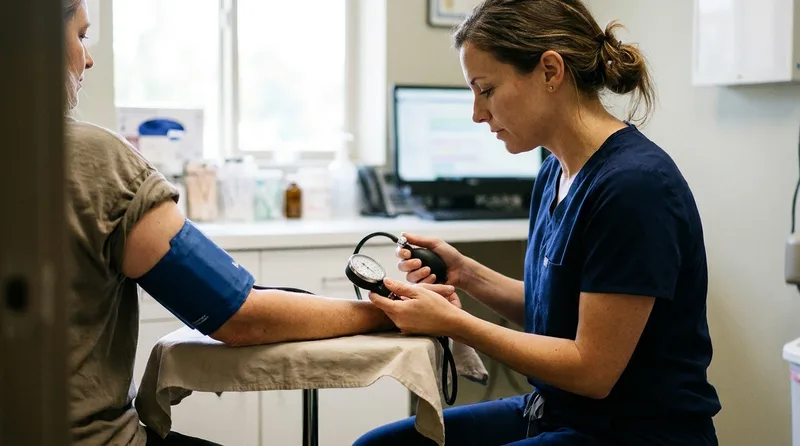
State law sets how nurse practitioners practice, including how they prescribe and when they collaborate with physicians. Georgia has its own rules, so it's fair to ask any clinic how its providers practice day to day. If you want one provider for checkups and long-term condition care, an NP is a reasonable choice. If your care already involves several specialists, ask how the clinic coordinates it, whoever leads your care.
Coverage is rarely the obstacle. Many plans cover primary care visits with nurse practitioners and let you list one as your primary care provider, but networks matter, so confirm your plan includes the clinic. Our guide to insurance vs cash-pay primary care breaks down what each option covers.
When Should You See a Doctor or Specialist Instead?
See a physician or specialist when your condition needs surgery, advanced procedures, or care from a subspecialty such as cardiology, oncology, or neurology. Your primary care provider, whether an NP or a doctor, can tell you when it's time and arrange the referral.
- Surgery or procedures, such as a joint replacement
- Cancer diagnosis and treatment planning
- Complex or rare conditions that don't respond to first-line care
- Hospital-based care after a serious illness or injury
Call 911 or go to the nearest ER for chest pain, trouble breathing, stroke symptoms, or a severe injury. Those moments call for emergency care, not a clinic visit.
Good primary care teams work with physicians and specialists all the time. A nurse practitioner who refers you isn't passing you off. It's how the system is supposed to work. Your regular provider stays involved afterward, reviewing specialist notes and keeping your overall plan on track. Specialist appointments can take weeks to schedule, so ask the office to send your records ahead.
How Do You Choose a Primary Care Provider in Atlanta?
Choose a primary care provider based on fit, not just the title: whether they're in your network, easy to reach, and good at listening. According to the AHRQ, having a usual source of primary care is associated with better health outcomes and more preventive care.

MedlinePlus lists insurance coverage, location, and your comfort with the provider among the things to consider when choosing a doctor or health care service. Five questions are worth asking any clinic:
- Is the clinic in network with my insurance, or what are the self-pay prices?
- How soon can I get a same-day or next-week appointment?
- Can I do follow-ups by telehealth?
- Which providers will I see, and what are their credentials?
- How does the clinic handle specialist referrals?
Lyva Primary Care & Wellness Center is nurse practitioner-led, with care from Alaa Hammond, FNP-C, an AANP board-certified family nurse practitioner. Patients in Avondale Estates, Decatur, and across DeKalb County often get same-day visits, and telehealth is available across Georgia. Lyva accepts most major insurance and offers transparent self-pay pricing.
The doctor vs nurse practitioner question matters less than finding a provider you trust and can reach. If you're in metro Atlanta and want a primary care home, book a visit and bring your questions.
This article is for general educational purposes only and is not a substitute for professional medical advice, diagnosis, or treatment. Always consult your provider at Lyva with any questions about a medical condition or treatment.
Ready to find a primary care home?
Book a visit with Lyva Primary Care & Wellness Center in Avondale Estates, or meet by telehealth from anywhere in Georgia.
Book Appointment →Prefer to talk first? Our team is happy to help.
Call (404) 905-6666 →Alaa Hammond, MSN, APRN, FNP-C
MSN, APRN, FNP-C · Lyva Primary Care & Wellness Center
Avondale Estates, GA family nurse practitioner providing whole-person primary and preventive care — including chronic disease management, men's health, and medical weight loss — in person and via telehealth across Georgia.
Frequently Asked Questions
Was this article helpful?
You may also like

Depression Treatment Near Decatur, GA: Where to Start
Looking for depression treatment near Decatur? Compare care options, from primary care to urgent help, and learn where to start in Avondale Estates.

What Are the 4 Stages of COPD? Symptoms at Each Stage
Learn the 4 stages of COPD, from mild to very severe, the symptoms at each stage, how spirometry sets your stage, and when to see a provider.

Hyperthyroidism vs Hypothyroidism: Symptoms and Testing
Hyperthyroidism vs hypothyroidism: compare symptoms from nausea to cold sensitivity, how thyroid testing works, and when to get checked.
Ready to Start Your Health Journey?
Schedule your appointment today and take the first step toward better health. New patients welcome. Most insurance accepted.

Primary Care • Men's Health • Weight Loss Clinic
Phone
+1 (404) 905-6666
Location
Avondale Estates, GA
Hours
Mon-Fri: 8AM - 6PM