
What Are the 4 Stages of COPD? Symptoms at Each Stage
Learn the 4 stages of COPD, from mild to very severe, the symptoms at each stage, how spirometry sets your stage, and when to see a provider.
Alaa Hammond, MSN, APRN, FNP-C, MSN, APRN, FNP-C
November 3, 2026

Wondering about the stages of COPD? COPD is sorted into four stages, from mild to very severe, using a breathing test called spirometry. Hearing "stage 2" or "stage 3" at a checkup can leave you with more questions than answers. The chronic care team at Lyva Primary Care & Wellness Center in Avondale Estates helps patients make sense of those numbers.
This guide covers what each stage means, which symptoms tend to show up, and how providers measure them. It also explains when a change in your breathing deserves a same-day visit.
Noticing changes in your breathing?
Lyva offers same-day visits in Avondale Estates and telehealth across Georgia.
Book Appointment →What Are the 4 Stages of COPD?
The four stages of COPD are mild, moderate, severe, and very severe. Providers assign them with the GOLD system, which compares your FEV1, the air you can forcefully exhale in one second, to what's expected for your age, height, and sex.
According to MedlinePlus, COPD is a group of lung conditions, including emphysema and chronic bronchitis, that block airflow and make breathing difficult. GOLD stands for the Global Initiative for Chronic Obstructive Lung Disease. It technically calls these steps "grades," but most people say stages. Staging begins once your FEV1/FVC ratio, a second spirometry number, falls below 0.70 after a bronchodilator.
| Stage | Severity | FEV1 (% of predicted) | What it often feels like |
|---|---|---|---|
| Stage 1 | Mild | 80% or higher | Little or no breathlessness; a lingering cough |
| Stage 2 | Moderate | 50% to 79% | Breathless on stairs or brisk walks; more mucus |
| Stage 3 | Severe | 30% to 49% | Breathless with light activity; frequent flare-ups |
| Stage 4 | Very severe | Below 30% | Breathless at rest; low oxygen; frequent flare-ups |
The COPD stages of disease track lung function, not just how you feel. Two people at the same stage can have very different days. Staging helps your provider decide how closely to follow you and which treatments to try. It also gives you a baseline, so later tests show whether things are holding steady.
What Do Stage 1 and Stage 2 COPD Symptoms Feel Like?
Stage 1 COPD often causes few or no symptoms, while stage 2 usually brings shortness of breath with effort, like climbing stairs. A cough that lingers for weeks and brings up mucus is the most common early clue at both stages.

Here's the catch. Most people blame these signs on aging, being out of shape, or a smoker's cough. Picture someone in their late 50s who gets winded walking from the parking lot to the grocery store and assumes it's just age. Because of that, the first stages of COPD symptoms can slip by for years.
- A cough that lingers, especially in the morning
- Clear, white, or yellowish mucus
- Wheezing or a whistling sound when you breathe out
- Getting winded on stairs or while carrying groceries
Not everyone with COPD has smoked. According to the NHLBI, long-term exposure to dust, chemical fumes, and air pollution can also damage the airways. Stage 2 is often when people first see a provider, because breathlessness starts to limit daily plans. Starting care here can ease symptoms and help protect the lung function you still have.
What Do Stage 3 and Stage 4 COPD Symptoms Look Like?
Stage 3 COPD causes breathlessness with light activity, and stage 4 can cause it even at rest. Fatigue, low blood oxygen, and sudden symptom spikes become more common once airflow drops below 50% of predicted.
Those spikes are called flare-ups, or exacerbations. Infections and irritants like smoke often set them off. According to Cleveland Clinic, COPD symptoms tend to worsen gradually as lung damage builds, and in severe disease a single flare-up can lead to a hospital stay.
- Breathlessness while dressing, bathing, or crossing a room
- Frequent chest infections and flare-ups
- Ankle or leg swelling, which can point to strain on the heart
- Unplanned weight loss and low energy
Care at these stages often adds oxygen testing, pulmonary rehabilitation, and input from a lung specialist. Some people need supplemental oxygen, but that's decided by blood oxygen testing, not by stage alone. Your primary care provider keeps those pieces connected.
Related: Breathing trouble that starts later in life isn't always COPD. Adult-onset asthma can look similar but needs a different plan. Read about adult onset asthma →
How Do Providers Decide Which Stage You're In?
Providers use spirometry, a simple breathing test where you blow into a tube as hard and as long as you can. A post-bronchodilator FEV1/FVC ratio below 0.70 confirms COPD, and your FEV1 percentage then sets the stage.
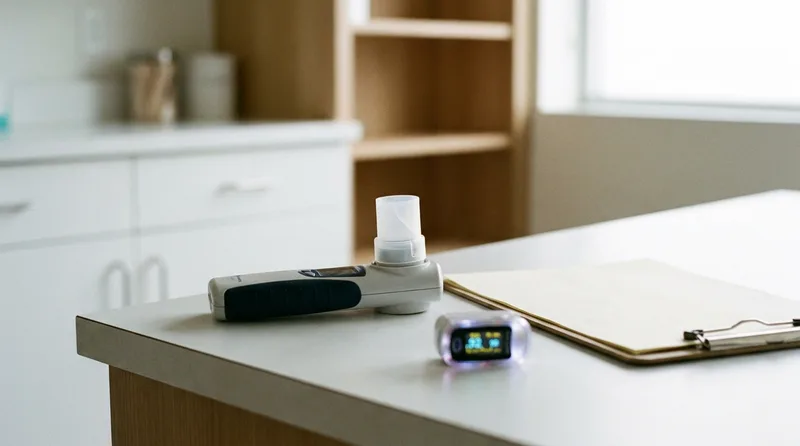
The National Heart, Lung, and Blood Institute describes spirometry as the main lung function test for diagnosing COPD. Providers may add chest imaging or a blood oxygen check. "Post-bronchodilator" simply means the test is repeated after a medicine that opens your airways. The test is quick and doesn't involve needles.
Your number is only part of the picture. Providers also ask how breathless you feel and how many flare-ups you've had in the past year. Two common tools are the mMRC breathlessness scale, which runs from 0 to 4, and the COPD Assessment Test, scored from 0 to 40. According to GOLD guidance, providers combine these results to shape treatment.
Bring a list of your symptoms, your smoking history, and any workplace dust or fume exposure to your visit.
Can You Slow COPD From Moving to the Next Stage?
Yes, you can often slow lung function loss, even though damage already done can't be reversed. Quitting tobacco, staying current on vaccines, and following your treatment plan help protect the airflow you have left at any stage.
According to the CDC, many leading causes of death are linked to risk factors you can change, including tobacco use and physical inactivity. The NHLBI's treatment overview adds that quitting smoking, medicines, and pulmonary rehabilitation are among the main ways to manage COPD. Five steps matter at every stage:
- Quit tobacco and avoid secondhand smoke. Ask your provider about support options.
- Use your medicines as prescribed, and have your inhaler technique checked at visits.
- Stay current on vaccines your provider recommends, such as flu, COVID-19, pneumonia, and RSV.
- Ask about pulmonary rehabilitation, a supervised program of exercise and breathing training.
- Limit smoke, dust, and fumes at home and at work.
Small habits help too. Pursed-lip breathing, where you inhale through your nose and exhale slowly through pursed lips, can ease breathlessness during activity.
If you have a smoking history, ask whether lung cancer screening fits your situation. Our guide to cancer screening guidelines by age explains which tests apply at different ages.
When Should You See a Provider About COPD Symptoms in Avondale Estates?
See a provider soon if a cough lasts more than a few weeks, everyday tasks leave you winded, or symptoms suddenly worsen. Lyva Primary Care & Wellness Center offers same-day visits in Avondale Estates and telehealth across Georgia for these concerns.

Call 911 or go to the nearest ER for severe shortness of breath, trouble speaking in full sentences, blue or gray lips or fingertips, chest pain, or new confusion. Those signs need emergency care, not an appointment.
For ongoing COPD care, Lyva's nurse practitioner, Alaa Hammond, FNP-C, can review your symptoms, arrange breathing tests, check inhaler technique, and coordinate vaccines. When you need a lung specialist, Lyva coordinates the referral. Follow-ups can happen in the office, just east of Decatur in DeKalb County, or by video from home.
Lyva accepts most major insurance and offers transparent self-pay pricing, so you know the cost before you book.
Knowing your COPD stage turns a confusing number into a plan. The stage matters less than what you do next: get tested, treat symptoms early, and keep an eye on flare-ups.
If you've noticed a lingering cough or changes in your breathing, book a visit with Lyva this week and bring your questions.
This article is for general educational purposes only and is not a substitute for professional medical advice, diagnosis, or treatment. Always consult your provider at Lyva with any questions about a medical condition or treatment.
Ready to talk about your breathing?
Book a visit with Lyva Primary Care & Wellness Center in Avondale Estates, or meet by telehealth from anywhere in Georgia.
Book Appointment →Prefer to talk first? Our team is happy to help.
Call (404) 905-6666 →Alaa Hammond, MSN, APRN, FNP-C
MSN, APRN, FNP-C · Lyva Primary Care & Wellness Center
Avondale Estates, GA family nurse practitioner providing whole-person primary and preventive care — including chronic disease management, men's health, and medical weight loss — in person and via telehealth across Georgia.
Frequently Asked Questions
Was this article helpful?
You may also like
Hyperthyroidism vs Hypothyroidism: Symptoms and Testing
Hyperthyroidism vs hypothyroidism: compare symptoms from nausea to cold sensitivity, how thyroid testing works, and when to get checked.
Menopause Treatment Near Avondale Estates: Options Compared
Compare menopause treatment near Avondale Estates, from hormone therapy to non-hormonal options, plus who to see and what insurance may cover.

Family History of Heart Disease: Risk in Avondale Estates
Family history of heart disease raises your risk but doesn't decide it. Learn who counts, which screenings help, and where to start in Avondale Estates.
Ready to Start Your Health Journey?
Schedule your appointment today and take the first step toward better health. New patients welcome. Most insurance accepted.

Primary Care • Men's Health • Weight Loss Clinic
Phone
+1 (404) 905-6666
Location
Avondale Estates, GA
Hours
Mon-Fri: 8AM - 6PM