
Hormone Testing for Women: What a Panel Actually Checks
Considering hormone testing for women? Learn exactly what a comprehensive panel checks, when to test, and what your results mean at Lyva.
Alaa Hammond, MSN, APRN, FNP-C, MSN, APRN, FNP-C
September 20, 2026

Hormone testing for women is a group of simple blood tests that look at several hormones together, not just one. If your labs have come back "normal" while you still feel off, this is usually why: a single number rarely tells the whole story.
At Lyva's hormone health services, this kind of testing is often the starting point for women dealing with tiredness, irregular periods, or symptoms that crept in during their late 30s or 40s. Here's what actually gets checked, when it's worth asking for, and what the results mean.
What Does Hormone Testing for Women Check?
This kind of testing usually checks estrogen, progesterone, and thyroid levels together, since these hormones work as a team and rarely tell the full story alone. Testosterone gets added for some women too.
Most of this comes from a simple blood draw. Estrogen (often measured as estradiol) and progesterone are the two main hormones behind your monthly cycle, and they rise and fall together in a pattern. A thyroid check, called TSH, is almost always included, because thyroid problems can cause the exact same symptoms as hormone changes, and it's easy to mix the two up without a test. Testosterone gets added if low energy or low sex drive is a main concern.
Which hormones your provider checks depends on your symptoms and your age. A 28-year-old with irregular periods gets a different set of tests than a 47-year-old with hot flashes and poor sleep.
Not sure which hormones to ask about?
A visit at Lyva starts with your symptoms, not a generic checklist, so testing is targeted to what your body is telling you.
Book an Appointment →When Should You Ask About Hormone Testing?
Ask about hormone testing when symptoms stick around for more than a couple of cycles, not after one rough week. A pattern that keeps repeating is what points to a hormone issue.
The most common reason women ask is the start of perimenopause, the years leading up to menopause. It typically begins in your 40s and can last several years. It's easy to write these signs off as stress. But when a few show up together, testing gives you a real answer instead of a guess.
- Periods that have become shorter, longer, heavier, or unpredictable
- Hot flashes or night sweats that interrupt sleep
- Tiredness that doesn't improve with rest
- New or worsening mood changes
- Low sex drive that has lasted more than a few weeks
- Trouble losing weight despite eating well and staying active
If several of these sound familiar, our guide to perimenopause symptoms and when to test breaks each one down in more detail.
What Do Your Hormone Levels Show?
Your hormone levels show whether you're cycling normally or moving toward menopause, based on the balance between four hormones: estrogen, progesterone, and two signaling hormones from the brain called LH and FSH. Together, they tell a clearer story than any single number.
Estrogen, also called estradiol, and progesterone come from your ovaries and drive your monthly cycle. Estrogen reflects how much your ovaries are producing right now, and low levels can explain hot flashes, dryness, and thinning hair. Progesterone rises after you ovulate, so a low reading later in your cycle usually means you didn't release an egg that month.
LH and FSH work differently: they come from the brain and act like a remote control for your ovaries. LH triggers ovulation each month. FSH keeps the ovaries working, and it rises as they naturally slow down with age. A rising FSH alongside falling estrogen is the classic pattern seen as perimenopause begins, according to Mayo Clinic.
One reading alone rarely settles anything, since all four levels shift throughout the month. That's why timing matters, and why your provider may ask you to test on a specific day of your cycle.

| Hormone | What It Shows |
|---|---|
| Estrogen (estradiol) | How much your ovaries are producing right now |
| Progesterone | Whether you ovulated that month |
| LH | The hormone that triggers ovulation |
| FSH | Made in the brain; rises as your ovaries slow down |
| TSH (thyroid check) | Rules out thyroid issues with similar symptoms |
How Does Thyroid Health Connect to Hormone Testing?
A thyroid check, called TSH, is included in most hormone panels because thyroid problems cause many of the same symptoms as hormone changes. Tiredness, weight changes, and mood shifts show up with both.
An underactive thyroid slows your metabolism and often causes fatigue, weight gain, and low mood, per MedlinePlus. An overactive thyroid can cause anxiety and a racing heartbeat instead. Both become more common in your 40s and 50s, the same years perimenopause symptoms tend to show up. No wonder the two get confused so easily without a test to tell them apart.
Checking your thyroid alongside your other hormones means your provider isn't guessing between two very different problems that happen to overlap. It's a simple addition to the same blood draw, so there's little reason to skip it.
Related: Weight gain that won't budge is one of the more common thyroid overlaps we see. See the warning signs to watch for →
What Happens During Testing, and How Do You Prepare?
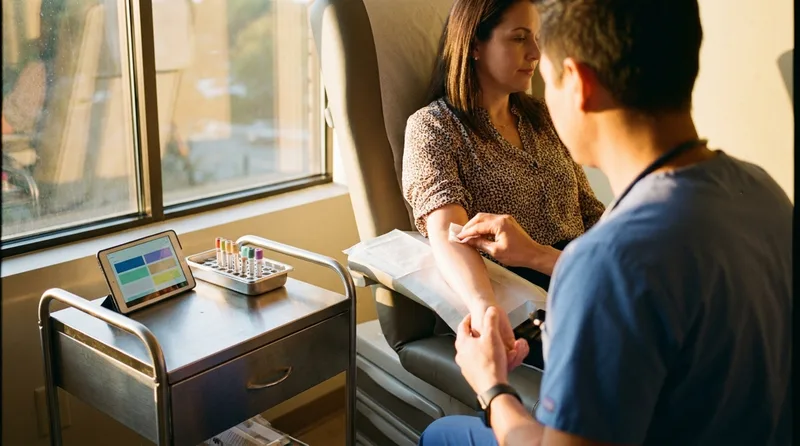
A hormone testing visit starts with questions about your symptoms, moves into a quick blood draw, and ends with a plan to review results together. The whole visit usually takes under an hour.
Your provider will ask about your cycle, any medications you take, and your sleep and mood. That shapes exactly which hormones get checked. Timing matters too: progesterone is best drawn about a week before your expected period, while other hormones are more flexible. Most of this process, aside from the blood draw itself, can happen by telehealth for patients anywhere in Georgia.
- Note your most recent period start date so testing can be timed well
- List any medications or supplements you're taking, including birth control
- Bring a short list of your main symptoms, even if it's rough
Ready to find out what's actually going on?
Same-day appointments are often available, and telehealth visits are offered statewide across Georgia.
Request an Appointment →What Do Your Results Mean?
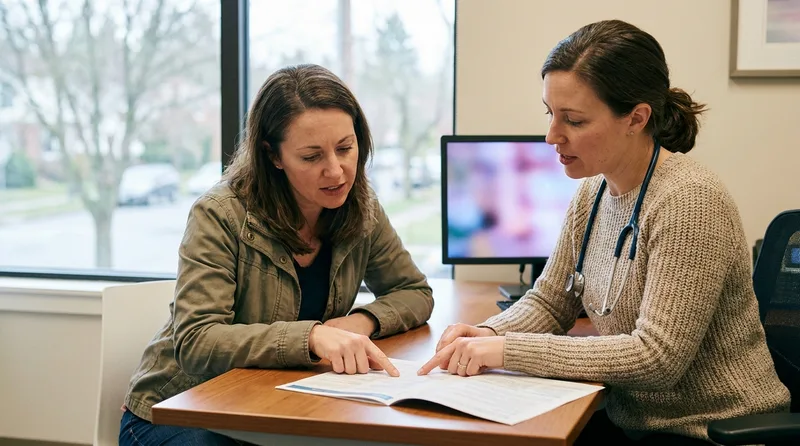
Your results mean something only alongside your symptoms and your age, not as numbers on a page by themselves. The same reading can mean different things for a 35-year-old and a 50-year-old.
The average age of natural menopause in the U.S. is 51, per Mayo Clinic, though symptoms often start a decade earlier. If your levels point to perimenopause, options range from lifestyle changes to hormone therapy, depending on your symptoms and health history. If your thyroid results are off, treatment usually starts with medication and a recheck in a few weeks. And if everything comes back normal but you still feel unwell, that's not a dead end. It often means checking other things, like iron or sleep quality.
The goal is never just a normal lab report. It's you feeling like yourself again, whatever that takes to get there.
Hormone testing for women is the clearest way to move from guessing to actually knowing what's driving your symptoms. Whether the answer turns out to be perimenopause, a thyroid issue, or something else, a full panel gives you and your provider a real starting point.
This article is for general educational purposes only and is not a substitute for professional medical advice, diagnosis, or treatment. Always consult your provider at Lyva with any questions about a medical condition or treatment.
Get Answers About Your Hormones
Book a visit at Lyva Primary Care & Wellness Center in Avondale Estates, or connect by telehealth from anywhere in Georgia.
Book Appointment →Prefer to talk it through first?
Contact Us →Alaa Hammond, MSN, APRN, FNP-C
MSN, APRN, FNP-C · Lyva Primary Care & Wellness Center
Avondale Estates, GA family nurse practitioner providing whole-person primary and preventive care — including chronic disease management, men's health, and medical weight loss — in person and via telehealth across Georgia.
Frequently Asked Questions
Was this article helpful?
You may also like

Cancer Screening Guidelines by Age: What Tests You Need
These cancer screening guidelines by age cover mammograms, colorectal, cervical, and lung cancer tests so you know what to schedule and when.

How to Monitor Chronic Kidney Disease and Slow Progression
Learn how to monitor chronic kidney disease with the right lab tests, a testing schedule, and lifestyle steps that help slow progression.
When to See a Doctor for Cold and Flu in Avondale Estates
Not sure when to see a doctor for cold and flu symptoms? Learn the warning signs, how long symptoms should last, and what a same-day visit involves.
Ready to Start Your Health Journey?
Schedule your appointment today and take the first step toward better health. New patients welcome. Most insurance accepted.

Primary Care • Men's Health • Weight Loss Clinic
Phone
+1 (404) 905-6666
Location
Avondale Estates, GA
Hours
Mon-Fri: 8AM - 6PM