Heart Health Nutrition Counseling: What to Eat and Why
Heart health nutrition counseling in Avondale Estates helps you choose foods that support your heart. Learn what to eat and how Lyva can help.
Alaa Hammond, MSN, APRN, FNP-C, MSN, APRN, FNP-C
October 20, 2026

Heart health nutrition counseling gives you a clear, personal plan for eating in a way that protects your heart. Heart disease causes about 1 in 5 deaths in the U.S., according to the CDC, and what you eat is a risk you can change.
At Lyva Primary Care & Wellness Center in Avondale Estates, our nurse practitioner builds these plans as part of our primary care and chronic care services.
This guide covers why counseling matters, which foods help, what to limit, how two popular eating patterns compare, and what a visit looks like.
Ready to talk through your numbers?
Book a visit with Lyva and get a food plan built around your labs, your schedule, and your budget.
Book Appointment →Why do you need heart health nutrition counseling?
You need nutrition counseling for your heart when general advice isn't turning into daily habits, or when your blood pressure, cholesterol, or blood sugar is already creeping up. A provider connects your labs and lifestyle to specific food changes, so you aren't guessing.
Here's the catch. Six in 10 U.S. adults live with a chronic disease, and high blood pressure, high cholesterol, and diabetes often have no symptoms. Nearly half of adults, about 48%, have high blood pressure, per the CDC. Picture a 52-year-old in DeKalb County told to "eat less salt" with no idea where the salt hides, or what to eat instead. A plan beats a warning.
Control is the bigger gap. Only about 1 in 4 adults with high blood pressure have it under control, roughly 25%, according to the CDC. Often the missing piece isn't willpower. It's a clear plan for a Tuesday night. A printed handout can't adjust when life gets in the way, but a provider can.
What does nutrition counseling for your heart involve?
Nutrition counseling is a series of one-on-one conversations with a licensed provider who turns your health history and lab results into a realistic eating plan. It centers on your foods, budget, schedule, and goals, rather than a generic printout.
It isn't a crash plan, and nothing here is a quick fix. You and your provider pick a few changes that fit your week, then adjust at follow-up visits. Our medical nutrition counseling in Avondale Estates service follows this same step-by-step approach. Because the plan is personal, two patients with the same diagnosis can leave with different menus.
Which foods support your cardiovascular system?
Vegetables, fruit, whole grains, beans, fish, nuts, and olive oil form the core of a heart-supportive menu. They supply fiber, potassium, and unsaturated oils that help manage cholesterol and blood pressure, according to the American Heart Association.
Everyday foods to build around
- Vegetables and fruit: leafy greens, berries, tomatoes, and citrus add fiber and potassium. Fill about half your plate.
- Whole grains: oats, barley, brown rice, and whole-wheat bread keep you full and support healthy LDL levels.
- Beans and lentils: an inexpensive swap for red meat a few nights a week.
- Fish rich in omega-3s: salmon, sardines, and trout, ideally twice a week.
- Unsalted nuts and seeds: a small handful works as a snack.
- Olive oil: use it in place of butter for cooking and dressings.
What it looks like on a plate
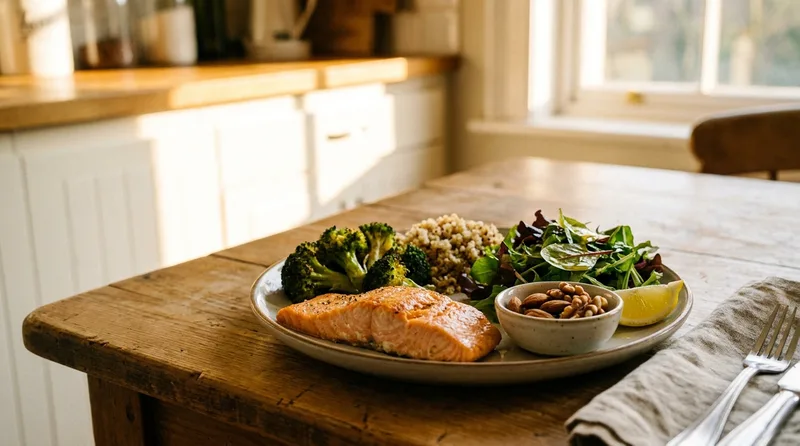
Think baked salmon, roasted broccoli, quinoa, and a salad with olive oil and lemon. Nothing exotic.
Which foods and habits work against your heart?
Excess sodium, ultra-processed foods, added sugar, processed meats, and heavy drinking raise heart risk most often. Over time they push up blood pressure, LDL cholesterol, and body weight. The goal is to limit them, not to ban them.
Most sodium doesn't come from the salt shaker. It hides in canned soup, deli meat, frozen meals, sauces, and restaurant food. One salty lunch won't harm you, but a daily pattern can.
Added sugar adds up quietly too. A single 20-ounce soda can carry more added sugar than the American Heart Association suggests for a whole day.
- Check the sodium line on canned soup, deli meat, and frozen meals before you buy.
- Trade sugary drinks for water, unsweetened tea, or sparkling water.
- Replace bacon and sausage with fish, beans, or skinless poultry a few times a week.
Not sure where to start?
A short visit with our nurse practitioner can show you which two or three changes matter most for you.
Request an Appointment →How do the Mediterranean and DASH eating patterns compare?
The Mediterranean pattern centers on olive oil, fish, beans, and produce, while DASH was built to lower blood pressure by limiting sodium and leaning on fruit, vegetables, and whole grains. Both are well studied, and either can work for you.
| Feature | Mediterranean pattern | DASH pattern |
|---|---|---|
| Main focus | Overall heart health and long-term eating habits | Lowering blood pressure |
| Core foods | Olive oil, fish, beans, nuts, vegetables, fruit | Vegetables, fruit, whole grains, beans, lean poultry |
| Sodium | No fixed target, but less processed food | Lower sodium is a built-in feature |
| Best fit | People who want a flexible, lasting pattern | People with high blood pressure or prediabetes |

The National Heart, Lung, and Blood Institute at the NIH developed DASH through blood pressure research, while Mayo Clinic describes the Mediterranean pattern as flexible and plant-forward. Many patients blend the two, and your provider can help you do that. Neither requires special products or a pricey grocery bill.
Who should consider nutrition counseling, and how does it help?
Adults with high blood pressure, high cholesterol, prediabetes, diabetes, or a family history of heart disease should consider nutrition counseling, because it ties each lab result to specific food changes. Small, steady shifts can improve all three numbers together.
- Blood pressure: less sodium and more potassium-rich produce.
- Cholesterol: more fiber and omega-3s, with fewer saturated animal products like butter.
- Blood sugar: steadier meals built on whole grains, beans, and vegetables.
It also fits if you've tried eating better alone and it didn't last. More than 1 in 3 U.S. adults has prediabetes, and most don't know it, according to the CDC. The CDC also reports that type 2 diabetes makes up 90-95% of diagnosed diabetes, and about 40% of adults live with obesity. The NIH notes that losing just 5-10% of body weight can improve blood pressure, blood sugar, and cholesterol. Counseling works alongside any medication you take, never in place of it.
Not sure where you stand? A heart health check up in Avondale Estates shows your numbers first.
What happens at a nutrition counseling visit at Lyva?
A visit starts with your health history and recent labs, then moves to goals, a personal food plan, and a follow-up schedule. Alaa Hammond, FNP-C, leads the visit in person at our Avondale Estates clinic or by telehealth across Georgia.
- Review your history, medications, family background, and recent labs.
- Talk through what you eat now, including work lunches, cooking time, and budget.
- Choose two or three goals you can start this week.
- Build a plan with food swaps and sample meals.
- Book follow-ups to check progress and adjust the plan.
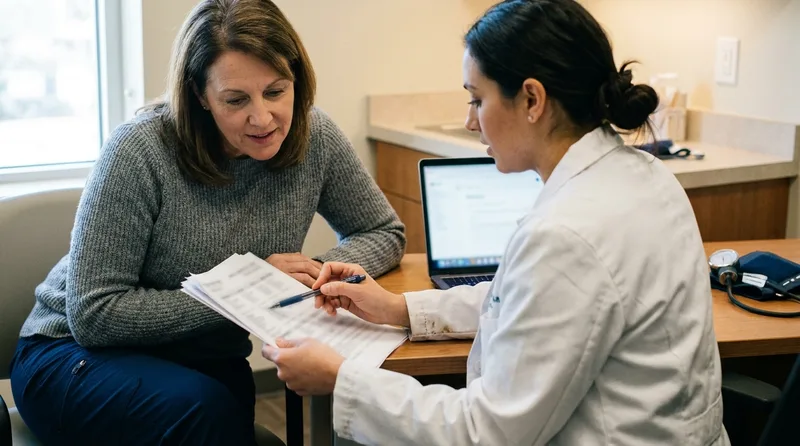
Come prepared. Bring a list of your medications and any recent lab results, plus a few photos of what you typically eat in a week. Phone photos of your breakfast, lunch, and dinner work better than memory, and they give your provider something concrete to review. Same-day appointments are often available, which helps when you're ready to start now.
What's the best next step for your heart?
The best next step is a conversation about your own numbers, because the right eating plan depends on them. Heart health nutrition counseling at Lyva turns your lab results into food choices you can keep.
Most people don't need a perfect menu. They need two or three changes they'll still be making in six months. Start with one swap from this guide, such as trading a sugary drink for water, then let your provider help you build from there. If you'd rather start with questions, our team is happy to explain what a first visit looks like and what to bring.
This article is for general educational purposes only and is not a substitute for professional medical advice, diagnosis, or treatment. Always consult your provider at Lyva with any questions about a medical condition or treatment.
Build a heart-friendly eating plan with Lyva
Book a nutrition counseling visit in Avondale Estates or by telehealth anywhere in Georgia.
Book Appointment →Have a question before you book?
Contact Us →Alaa Hammond, MSN, APRN, FNP-C
MSN, APRN, FNP-C · Lyva Primary Care & Wellness Center
Avondale Estates, GA family nurse practitioner providing whole-person primary and preventive care — including chronic disease management, men's health, and medical weight loss — in person and via telehealth across Georgia.
Frequently Asked Questions
Was this article helpful?
You may also like

Primary Care vs ER for Minor Injuries in Avondale Estates
Primary care vs ER for minor injuries: learn which cuts, sprains, and small fractures suit a same-day clinic visit and which need the ER.

Irregular Periods Causes: Hormone Levels and When to Worry
Learn the top irregular periods causes, what hormone levels like FSH and TSH reveal, and when to see a provider. Lyva serves Avondale Estates, GA.

Cholesterol Numbers Explained: LDL, HDL, and Triglycerides
Cholesterol numbers explained: what LDL, HDL, and triglycerides mean on your lipid panel, why total cholesterol misses the full picture, and next steps.
Ready to Start Your Health Journey?
Schedule your appointment today and take the first step toward better health. New patients welcome. Most insurance accepted.

Primary Care • Men's Health • Weight Loss Clinic
Phone
+1 (404) 905-6666
Location
Avondale Estates, GA
Hours
Mon-Fri: 8AM - 6PM