
Family History of Heart Disease: Risk in Avondale Estates
Family history of heart disease raises your risk but doesn't decide it. Learn who counts, which screenings help, and where to start in Avondale Estates.
Alaa Hammond, MSN, APRN, FNP-C, MSN, APRN, FNP-C
October 28, 2026

A family history of heart disease can feel like a warning label. It's really a head start. If your mother had a heart attack at 58, that detail changes how closely your own heart should be watched, and chronic care and heart risk management in Avondale Estates starts with exactly that conversation.
According to the CDC, heart disease is the leading cause of death in the U.S., responsible for about 1 in 5 deaths, or roughly 20%. Genes play a part in that. So do habits, and habits are the piece you can change.
This guide covers what counts as family history, how it shapes your risk, and which screenings to ask about. Lyva Primary Care & Wellness Center sees patients in Avondale Estates, just east of Decatur, and by telehealth across Georgia.
Not sure how your family history adds up?
Talk it through with a Lyva provider in Avondale Estates. Same-day visits are often available, and a quick call is a good place to start.
Call (404) 905-6666 →What counts as a family history of heart disease?
It means a close blood relative has had a heart attack, stroke, bypass surgery, stent, or diagnosed heart disease, especially at a young age. Parents, brothers, sisters, and children count most. Grandparents, aunts, and uncles add useful context.
The word "early" carries weight. The National Heart, Lung, and Blood Institute (NHLBI) uses age 55 or earlier for male relatives and 65 or earlier for female relatives when it talks about early heart disease in a family. A relative diagnosed at 80 tells you much less.
Write down these details for each relative:
- Your relationship to them.
- The condition, such as a heart attack, stroke, high cholesterol, or diabetes.
- Their age when it was found.
- Whether they smoked.
An unexplained sudden death in a young relative belongs on the list too. Even partial details help your provider see the pattern. Ask relatives on both sides of the family, since each side adds its own information.
Does family history mean you'll get heart disease?
No. A family history raises your odds, but it doesn't set your future. How much it raises them depends on who was affected, how young they were, and how many relatives share the pattern. Genes, shared habits, and treatment all shape the outcome.

According to MedlinePlus, a family member's disease raises your risk, but it doesn't mean you will definitely get it. Families share more than genes. They also share kitchens, neighborhoods, stress, and routines, which is why heart disease can cluster in a household even without one clear inherited cause.
These factors make a family pattern more meaningful:
- Age at diagnosis: younger onset carries more weight.
- Closeness: parents and siblings count more than cousins.
- Number affected: several relatives point to a stronger pattern.
- Type of condition: an early heart attack signals more than mild high blood pressure later in life.
Inherited cholesterol disorders deserve a mention. MedlinePlus Genetics describes familial hypercholesterolemia as an inherited condition marked by very high blood cholesterol, and it can go unnoticed without testing.
Related: Cholesterol is one of the first numbers worth checking when heart disease runs in your family. Cholesterol Numbers Explained: LDL, HDL, and Triglycerides →
Which screenings should you ask about when heart disease runs in your family?
Ask about a blood pressure check, a cholesterol panel, and a blood sugar or A1C test, since all three can look fine for years while risk builds quietly. Your provider may add other tests based on your relatives' ages and your own results.
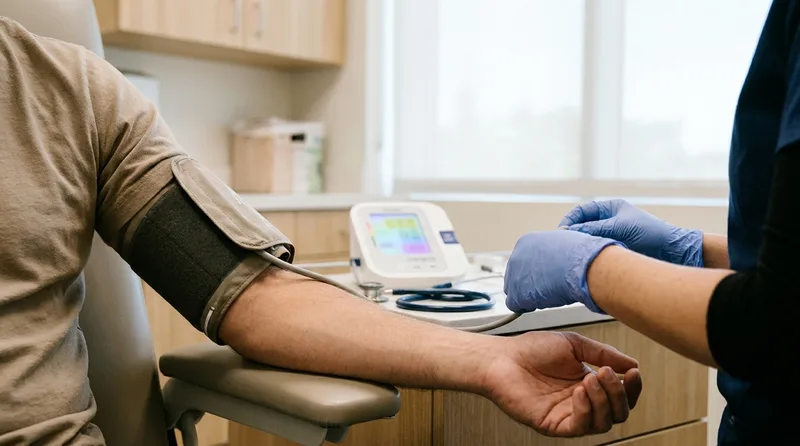
The CDC notes that high blood pressure, high cholesterol, and diabetes often have no symptoms and are found through routine screening. Waiting for chest pain is a poor plan.
| Test | What it checks | Why it matters with family history |
|---|---|---|
| Blood pressure check | Force of blood against artery walls | High blood pressure is common, often silent, and can run in families |
| Cholesterol panel | LDL, HDL, and triglycerides | Can reveal inherited cholesterol disorders early |
| A1C or fasting glucose | Blood sugar control over time | Diabetes raises heart risk and also clusters in families |
| Lipoprotein(a), sometimes | An inherited cholesterol particle | Some providers check it once when family history is strong |
The U.S. Preventive Services Task Force recommends statins for adults 40 to 75 who have at least one risk factor and an estimated 10-year cardiovascular risk of 10% or greater. That's why complete numbers matter, not family history alone. A cardiovascular risk assessment test pulls them into one estimate.
What can you do to lower your risk when heart disease runs in the family?
Focus on the risks you can change: blood pressure, cholesterol, physical activity, tobacco use, sleep, and weight. Small, steady changes add up, and they matter more when your family history already tilts the odds.
- Know your numbers. Get blood pressure, cholesterol, and blood sugar checked, then repeat as your provider advises.
- Move most days. Brisk walking counts. A 10-minute walk after dinner is a realistic start.
- Eat for your heart. Build meals around vegetables, beans, fish, and whole grains, and cut back on processed foods and sugary drinks.
- Stop tobacco. Quitting lowers heart risk at any age, and your provider can help you plan it.
- Protect your sleep. Aim for a steady schedule, since poor sleep tends to push blood pressure and weight in the wrong direction.
Weight matters too. According to the NIH, losing 5-10% of body weight can improve blood pressure, blood sugar, and cholesterol. If you're carrying excess weight, a provider-supervised plan gives you structure and support.
Start with a preventive visit.
A routine primary care visit is the easiest place to review your family history, check your numbers, and build a plan.
See primary care services →When should you see a provider in Avondale Estates about your family history?
See a provider before symptoms start, ideally at your next routine visit, and sooner if a parent or sibling had heart disease at a young age. Lyva often has same-day visits in Avondale Estates and offers telehealth across Georgia.

Alaa Hammond, FNP-C, a family nurse practitioner, can review your family history, order the right screenings, and coordinate a cardiology referral if you need one. Care is whole-person, so lifestyle, stress, and sleep are part of the conversation.
Bring these to your visit:
- A simple family tree with each relative's heart-related conditions and age at diagnosis.
- Your current medications and supplements.
- Recent home blood pressure readings, if you track them.
- Any lab results from the past year.
Lyva serves Avondale Estates, Decatur, and the rest of DeKalb County, plus patients statewide by video visit. The office is at 8 N Clarendon Ave, Suite 100. We accept most major insurance, and self-pay pricing is transparent.
What should you do next if heart disease runs in your family?
Write down your family history this week and share it with a provider. Your family history of heart disease is information, not a verdict, and it works best when someone uses it to plan your screenings early.
Heart risk is easier to manage once you measure it. A single visit can turn a vague worry into a clear plan, with screenings scheduled and habits prioritized. If a relative was diagnosed young, don't wait for your next annual physical to mention it.
This article is for general educational purposes only and is not a substitute for professional medical advice, diagnosis, or treatment. Always consult your provider at Lyva with any questions about a medical condition or treatment.
Book a heart risk review in Avondale Estates
Bring your family tree. A Lyva nurse practitioner will help you turn it into a plan, in person or by telehealth anywhere in Georgia.
Book Appointment →Have questions first?
Contact Us →Alaa Hammond, MSN, APRN, FNP-C
MSN, APRN, FNP-C · Lyva Primary Care & Wellness Center
Avondale Estates, GA family nurse practitioner providing whole-person primary and preventive care — including chronic disease management, men's health, and medical weight loss — in person and via telehealth across Georgia.
Frequently Asked Questions
Was this article helpful?
You may also like

Asthma Triggers in Atlanta, GA: Pollen, Smog and Inhalers
Asthma triggers Atlanta residents face include pollen, smog, and humid indoor air. Learn the signs your inhaler isn't enough and when to get care.

Heart Health Nutrition Counseling: What to Eat and Why
Heart health nutrition counseling in Avondale Estates helps you choose foods that support your heart. Learn what to eat and how Lyva can help.

Primary Care vs ER for Minor Injuries in Avondale Estates
Primary care vs ER for minor injuries: learn which cuts, sprains, and small fractures suit a same-day clinic visit and which need the ER.
Ready to Start Your Health Journey?
Schedule your appointment today and take the first step toward better health. New patients welcome. Most insurance accepted.

Primary Care • Men's Health • Weight Loss Clinic
Phone
+1 (404) 905-6666
Location
Avondale Estates, GA
Hours
Mon-Fri: 8AM - 6PM