
Continuous Glucose Monitor vs Fingerstick Testing Guide
Comparing a continuous glucose monitor vs fingerstick testing? See how accuracy, cost, and daily routine differ so you can choose the right approach.
Alaa Hammond, MSN, APRN, FNP-C, MSN, APRN, FNP-C
September 28, 2026
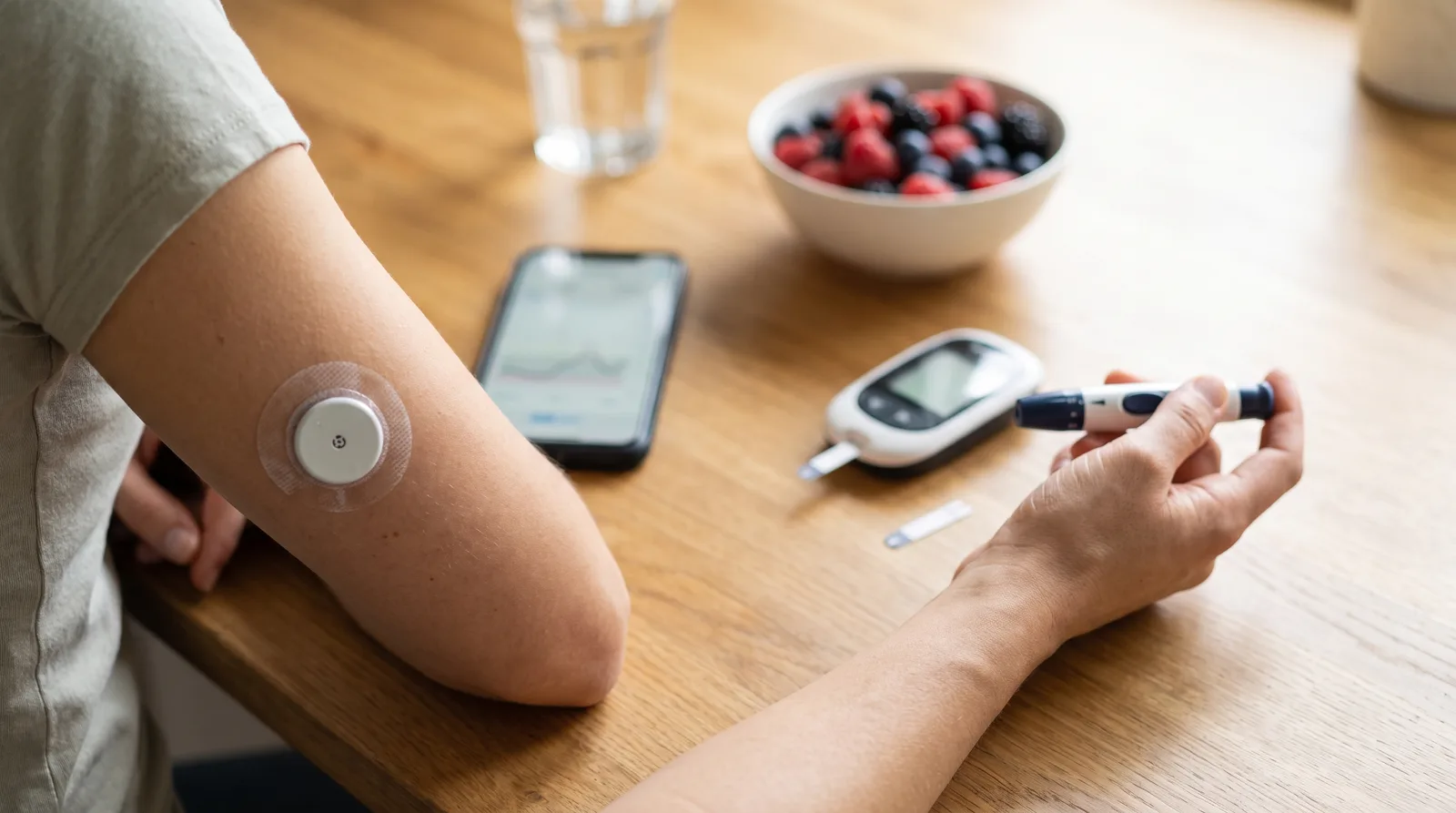
If you manage diabetes or prediabetes, you have probably faced this exact choice: a continuous glucose monitor vs fingerstick testing, and which one actually fits your life. Both methods track blood sugar, but they work differently, cost different amounts, and suit different routines. If ongoing blood sugar management is part of your care plan, Lyva's chronic care program can help you build a monitoring routine that fits your daily life, not the other way around.
This guide breaks down how each method works, how accurate they are, what they cost, and who tends to do better with each. Nearly 40 million Americans have diabetes, and about a quarter do not know it, according to MedlinePlus. Getting monitoring right matters more than most people realize.
Not sure which monitoring approach fits your routine?
A Lyva provider can review your history and help you choose between a CGM and fingerstick testing based on your goals.
Book an Appointment →What Is the Difference Between a Continuous Glucose Monitor and Fingerstick Testing?
A continuous glucose monitor reads glucose levels every few minutes through a small sensor worn on the skin, while fingerstick testing checks a single blood drop at one moment in time. The CGM builds a trend line. The fingerstick gives a snapshot.
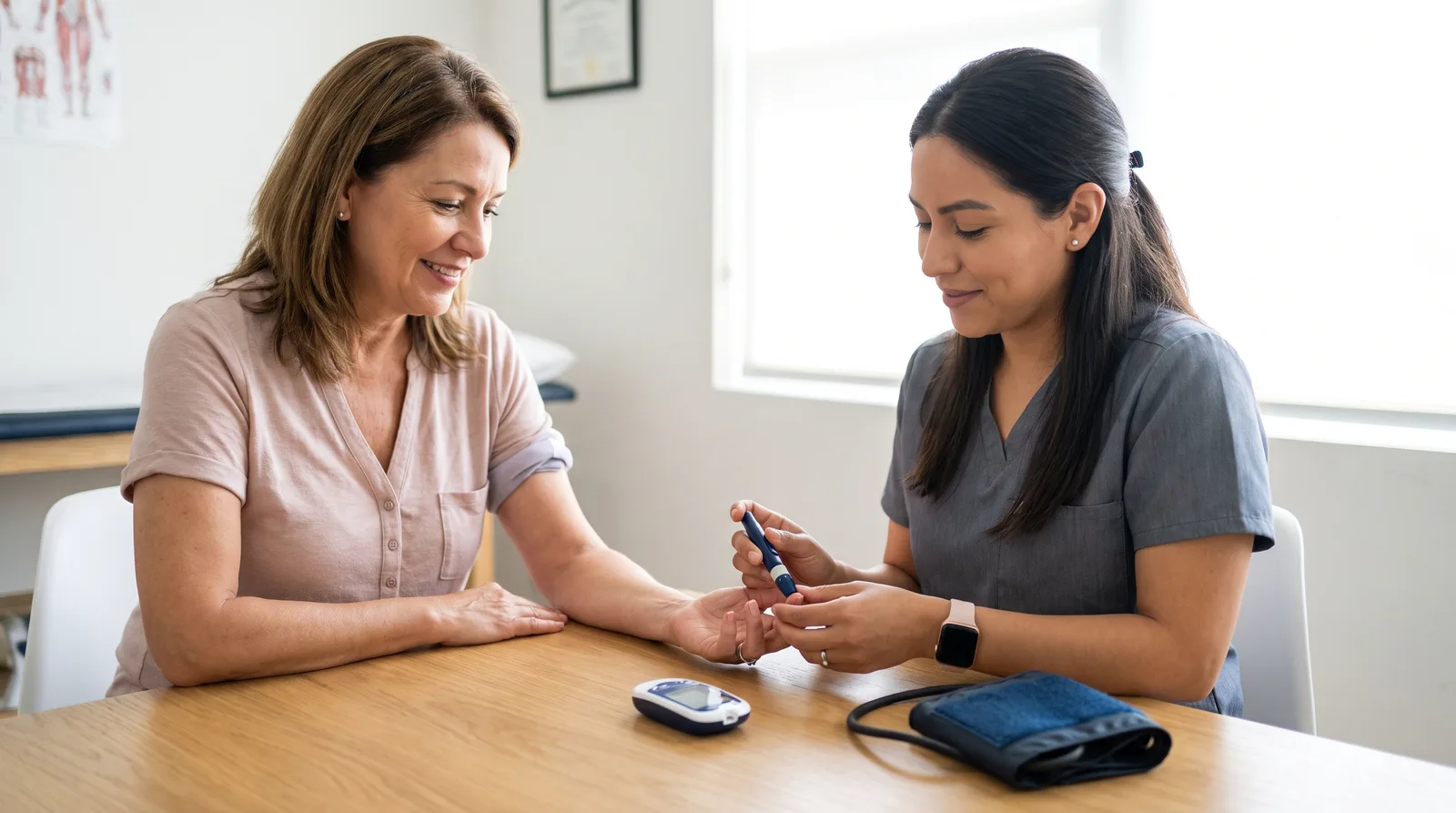
Fingerstick testing has been the standard for decades: prick a fingertip, apply blood to a test strip, and read a glucometer within seconds. A CGM instead uses a thin filament under the skin that measures interstitial fluid and sends a reading to a phone automatically.
That structural difference explains almost everything else here. A snapshot cannot show whether glucose is rising, falling, or holding steady. A continuous stream can, and that context changes how people respond to a high or low reading.
- Fingerstick: single point-in-time reading, requires a blood sample each time
- CGM: continuous readings every 1 to 5 minutes, worn for 10 to 14 days per sensor
- Fingerstick: no trend arrows or alerts
- CGM: trend arrows, high and low alerts, app-based history
How Does a Continuous Glucose Monitor Work?
A continuous glucose monitor uses a hair-thin sensor under the skin to measure glucose in the fluid between cells, then transmits that reading wirelessly to an app roughly every five minutes. No fingerstick is needed for daily use once the sensor is calibrated.
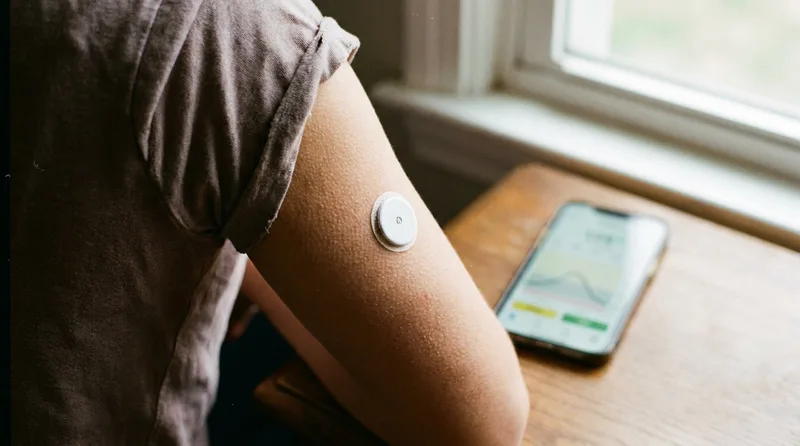
The sensor lasts 10 to 14 days depending on the brand, held in place by a small adhesive patch through showers and normal activity. Most current CGMs, including popular Dexcom and FreeStyle Libre systems, no longer require routine fingerstick calibration. The app layers on trend arrows, so a straight arrow means stable glucose while a steep arrow signals a fast rise or drop.
That trend data is the real advantage. A person can see a slow overnight rise hours before it would ever show up on a single fingerstick check the next morning, and adjust a meal, a walk, or a medication dose in response, always in coordination with their provider.
Related: Not sure if your numbers point to a bigger issue. Our guide on what high blood sugar means and what to do next walks through the warning signs.
How Accurate Is Fingerstick Testing Compared to a CGM?
Fingerstick testing is generally considered the more precise single-point measurement, because it samples blood directly rather than fluid between cells. A CGM trades a small amount of point accuracy for continuous, trend-based information that a fingerstick cannot provide.
Interstitial glucose lags blood glucose by roughly 5 to 10 minutes, which matters most when levels are changing quickly, such as right after a meal or during exercise. During those fast swings, a CGM reading and a fingerstick reading can genuinely disagree. When glucose is relatively stable, the two methods usually track closely. Modern CGM sensors have narrowed this gap considerably compared to earlier generations, and many current models are now approved for treatment decisions without a confirmatory fingerstick in most everyday situations.
That said, both tools have a role. Some clinicians still recommend a fingerstick check to confirm a CGM reading during a suspected severe low or high, or when symptoms clearly do not match the number on screen.
Who Should Consider a Continuous Glucose Monitor?
People on insulin, those with frequent low blood sugar episodes, and anyone whose glucose swings widely throughout the day tend to benefit most from a CGM. It is not only for advanced type 1 diabetes; many people managing type 2 diabetes or prediabetes now use one as well.
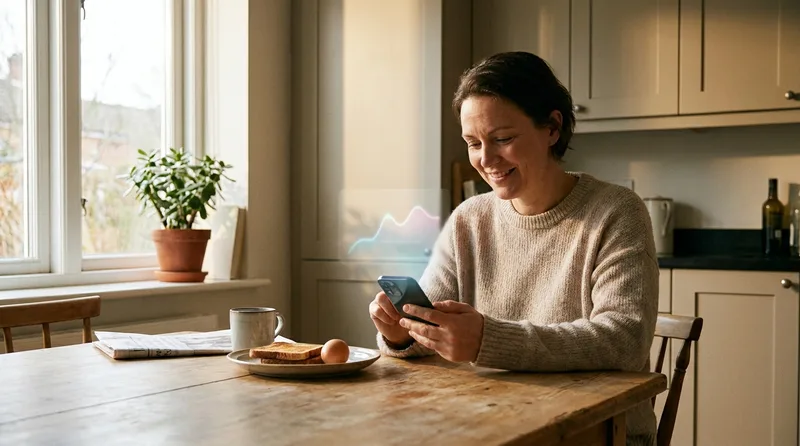
Type 2 diabetes accounts for 90 to 95 percent of all diagnosed diabetes cases in the United States, and a growing share now turns to continuous monitoring, a shift documented by the National Institute of Diabetes and Digestive and Kidney Diseases. A CGM also helps people who struggle to remember multiple daily fingersticks, or who want to see how specific foods or workouts affect their numbers.
- You use insulin, especially multiple daily injections or a pump
- You have experienced unrecognized low blood sugar episodes
- You want to see how meals, stress, or exercise move your numbers in real time
- You are pregnant with gestational or pre-existing diabetes and need tighter monitoring
What Are the Downsides of Continuous Glucose Monitors?
A CGM costs more than fingerstick supplies, requires wearing a sensor on the body at all times, and can occasionally show a reading that does not match how a person feels. Some people also find the adhesive irritating after repeated use.
Skin irritation under the adhesive patch is the most commonly reported complaint, ranging from mild redness to a reaction that requires switching sensor sites. Insurance coverage varies by plan, and while more plans now cover CGMs for type 2 diabetes, coverage is still less universal than for fingerstick strips. There is also a learning curve to reading trend arrows and lag time.
None of these downsides make a CGM the wrong choice. They simply mean the decision should factor in your budget, your skin sensitivity, and how you personally respond to constant data.
Weighing a CGM against your current routine?
A Lyva provider can review your glucose history and insurance coverage to help you decide what actually fits.
Schedule a Visit →How Much Do CGMs Cost Compared to Fingerstick Supplies?
Fingerstick supplies typically run $20 to $60 a month for strips and lancets, while a CGM without insurance can run $150 to $400 a month depending on the brand and sensor frequency. With insurance or Medicare coverage, out-of-pocket CGM costs often drop close to fingerstick-level spending.
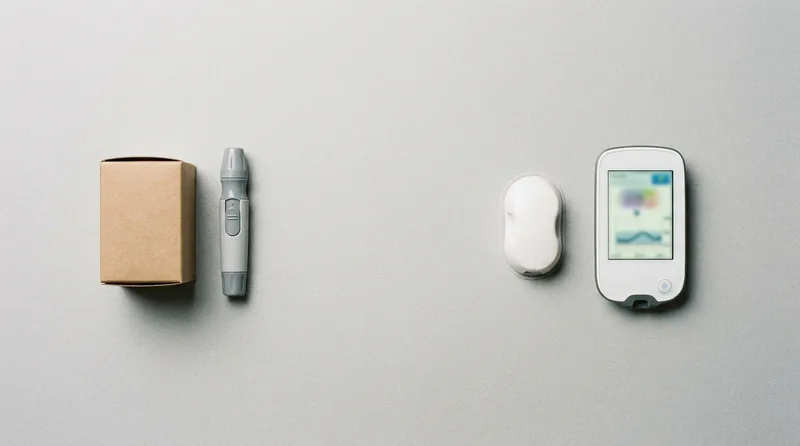
Cost comparisons rarely stop at the sticker price. Fewer fingersticks means fewer strips purchased, and a CGM can reduce the severe highs or lows that lead to urgent care visits. Medicare and most major insurers now cover CGMs for many people with type 2 diabetes on insulin, which often narrows the real-world gap. The table below compares a typical month under each method.
| Factor | Fingerstick Testing | Continuous Glucose Monitor |
|---|---|---|
| Typical monthly cost, no insurance | $20 to $60 | $150 to $400 |
| Readings per day | Usually 1 to 4 | Roughly 288, automatically |
| Trend and alert data | Not available | Included |
| Replacement schedule | Per test | Sensor every 10 to 14 days |
A quick check on your own coverage before switching methods can save real money. Our overview of how often to get a diabetes screening test covers related insurance questions worth asking your plan.
Continuous Glucose Monitor vs Fingerstick Testing: Which Should You Choose?
Choose a CGM if you use insulin, experience unpredictable swings, or want trend data. Choose fingerstick testing if your glucose stays fairly stable, your insurance does not yet cover a CGM well, or you simply prefer a lower-cost, lower-maintenance routine.
| Factor | Fingerstick Testing | Continuous Glucose Monitor |
|---|---|---|
| Point-in-time accuracy | More precise, samples blood directly | Very close, with a short lag during fast swings |
| Trend visibility | None, single reading only | Continuous, with rise and fall arrows |
| Daily routine | Prick and test each time, no device worn | Sensor worn continuously, replaced every 10 to 14 days |
| Skin contact | None | Adhesive patch; some report mild irritation |
| Learning curve | Minimal | Moderate, reading trend arrows and lag time |
| Best fit | Stable glucose, budget-conscious routines | Insulin use, unpredictable swings, pregnancy |
Plenty of people use both, leaning on a fingerstick as backup during a suspected sensor error and the CGM for trend awareness the rest of the time. The right combination comes down to your diagnosis, your insurance, and how actively you want to manage fluctuations. Consistency matters more than perfection: a fingerstick routine you stick with beats a CGM sitting unused in a drawer.
The choice between a continuous glucose monitor vs fingerstick testing rarely comes down to which device is objectively better. It comes down to your diagnosis, your budget, your insurance, and how you respond to seeing constant data.
This article is for general educational purposes only and is not a substitute for professional medical advice, diagnosis, or treatment. Always consult your provider at Lyva with any questions about a medical condition or treatment.
Ready to Build a Monitoring Plan That Fits Your Life?
Lyva's providers offer in-person visits in Avondale Estates and telehealth across Georgia to help you choose and manage the right glucose monitoring approach.
Book Appointment →Prefer to talk it through first?
Contact Lyva Wellness →Alaa Hammond, MSN, APRN, FNP-C
MSN, APRN, FNP-C · Lyva Primary Care & Wellness Center
Avondale Estates, GA family nurse practitioner providing whole-person primary and preventive care — including chronic disease management, men's health, and medical weight loss — in person and via telehealth across Georgia.
Frequently Asked Questions
Was this article helpful?
You may also like

Bioidentical Hormone Replacement Therapy: How It Works
Considering bioidentical hormone replacement therapy? Learn how BHRT works, who qualifies, and what to expect at Lyva in Avondale Estates.
Diabetes Screening Test: Who Needs One and How Often
Wondering if you need a diabetes screening test? Learn who's at risk, how often to test, and what your results mean at Lyva in Avondale Estates.

Cardiovascular Risk Assessment Test: What It Shows
A cardiovascular risk assessment test checks blood pressure, cholesterol, and blood sugar to estimate your heart attack and stroke risk.
Ready to Start Your Health Journey?
Schedule your appointment today and take the first step toward better health. New patients welcome. Most insurance accepted.

Primary Care • Men's Health • Weight Loss Clinic
Phone
+1 (404) 905-6666
Location
Avondale Estates, GA
Hours
Mon-Fri: 8AM - 6PM